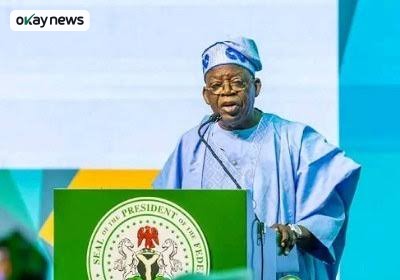
Nigeria’s President, Bola Ahmed Tinubu, has urged West African and Sahel countries to reactivate a regional standby force and strengthen joint security work, including deeper intelligence sharing and coordinated operations across borders.
He also encouraged governments in the region to make stronger use of Nigeria’s National Counter Terrorism Centre (NCTC) as a hub for intelligence coordination and operational planning, as countries face rising threats linked to terrorism and organised crime.
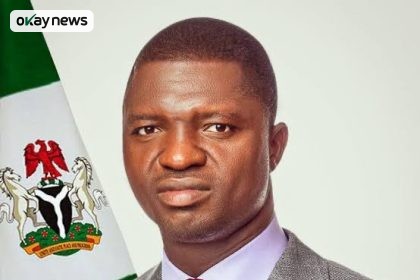
His message was delivered in an official Nigerian statement presented by Nigeria’s Minister of State for Foreign Affairs, Bianca Odumegwu-Ojukwu, at a security conference in Accra, Ghana’s capital, held from Thursday, 29 January 2026, to Friday, 30 January 2026. The meeting focused on the security situation, operational challenges, and future risks in West Africa and the Sahel, the semi-arid belt south of the Sahara Desert that has seen escalating militant violence in recent years.
In a statement issued on Saturday, 31 January 2026, in Abuja, Nigeria’s capital, Magnus Eze, the Special Assistant on Communications and New Media to the minister, said the President reaffirmed Nigeria’s support for peace, security, and stability across the region, while warning that the security crisis in the Sahel is worsening and requires closer cooperation among neighbouring states.
Okay News reports that Tinubu said Nigeria supports stronger joint responses and is open to broader collective action to confront the crisis, noting that Nigeria backs collaborative and multilateral approaches to tackling the Sahel security emergency.
The President said Nigeria has continued to monitor and disrupt terrorist activities through cooperation with regional and continental structures, including the Regional Intelligence Fusion Unit, Liaison Fusion Unit, Eastern Africa Fusion Unit, and the Committee of Intelligence and Security Services of Africa (CISSA).
He also recalled that in 2025, the National Counter Terrorism Centre (NCTC) signed a Memorandum of Understanding (MOU) with the African Union (AU), the continent-wide body of 55 member states, to pursue joint counterterrorism efforts against terrorism and violent extremism across Africa.
Tinubu said the NCTC is positioned to strengthen wider regional efforts by serving as an intelligence and operations coordinating centre in a unified counterterrorism push, as countries work to improve information sharing and joint action.
He also warned that extremist groups are increasingly using cyberspace to spread misinformation and disinformation, which he said can weaken security and destabilise societies across the region.
The President said Nigeria has recorded significant progress in cyber monitoring, surveillance, and intelligence gathering through the National Cyber Security Centre (NCSC). He encouraged other West African countries to benefit from Nigeria’s systems while partnering to build stronger regional structures capable of countering cyber-enabled threats.
Tinubu stressed that security cooperation remains central to Nigeria’s national interest and to stability across West Africa. He said joint initiatives, intelligence sharing, and coordinated operations are needed to improve the region’s collective ability to fight terrorism, transnational organised crime, and other forms of insecurity that undermine development.
He also noted that security conditions in parts of West Africa remain unstable, with rising casualties that include women and children. According to him, key challenges include the lack of a single counterterrorism focal point in some settings and overstretched defence formations, which he said have created gaps that armed groups have exploited.
Tinubu said those gaps have helped Sahel-based militants expand beyond the central Sahel into coastal West Africa, adding that countries such as Benin, Togo, Ghana, and Nigeria are increasingly feeling the effects.
He further raised concerns about the risk of drug trafficking networks shifting more operations into weaker jurisdictions in West Africa, especially as anti-narcotics campaigns intensify in parts of South America. He warned that this trend could increase the chances of cooperation between traffickers and insurgent groups, including arrangements where cash is exchanged for logistics support and access to protected smuggling routes.
The President also pointed to political divisions in the region, including what he described as a growing divide between the Economic Community of West African States (ECOWAS), a 15-member regional bloc, and the Alliance of Sahel States (AES), as well as heavy dependence on foreign support and reluctance by some states to allow supranational institutions to shape key defence decisions.
To address what he described as longstanding and emerging misunderstandings among member states, Tinubu said political leanings should be separated from security collaboration so that sustainable security partnerships can take root.
Beyond military operations, the President urged governments to address underlying drivers of insecurity, including poverty, weak governance, marginalisation, and what he described as an over-militarised approach to counterterrorism.
He called on ECOWAS and AES member states to reduce tensions and rebuild an inclusive framework that reflects shared security and economic interests across the region.
Tinubu said he believes the discussions held in Accra by intelligence chiefs and other strategic stakeholders can help shape a lasting, inclusive regional counterterrorism framework, especially as West Africa and the Sahel confront evolving threats.