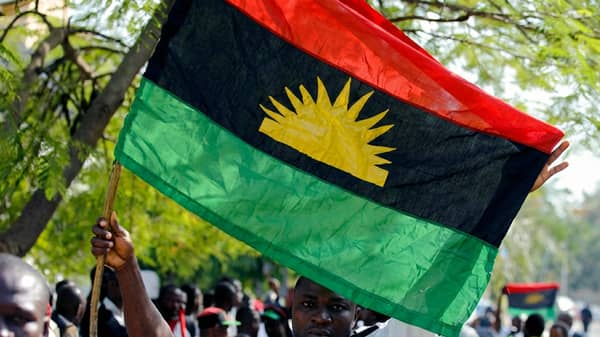
Nigeria has stepped up its lobbying efforts in the United States, spending far more than separatist groups to shape how the Trump administration views the country’s security challenges. According to Africa Confidential, the administration of President Bola Tinubu is paying about $750,000 a month to DCI Group, a Republican-linked firm, to counter claims being promoted by the Biafran Republic Government in Exile. The separatist group, by contrast, is paying $66,000 monthly to the smaller firm Madison & Washington to push allegations of a “Christian genocide” and call for sanctions against Nigerian officials, as well as possible United States military action inside Nigeria.
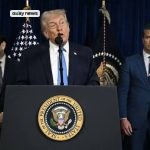
Okay News learnt that the lobbying push gained urgency after President Donald Trump said last November that the United States could intervene in Nigeria “guns ablazing” to stop what he described as mass killings of Christians. Concerned about the impact of such statements, Nigeria’s contract with DCI Group, arranged through Aster Legal, is aimed at presenting a broader picture of the conflict. The firm has been tasked with stressing that Nigeria’s security crisis affects both Christians and Muslims, while also highlighting cooperation with the United States on counter-terrorism and economic reforms. DCI Group’s leadership includes figures with links to Republican politics, which Nigeria sees as key to getting its message across to the White House and Congress.
On the other side, the Biafran separatists are using their lobbying contract to argue that the Tinubu administration is either unwilling or unable to stop religious violence. Documents linked to the deal with Madison & Washington also talk about future “defence and security arrangements” and outreach to United States oil companies under a proposed Biafran state. The group claims such a state would be strongly aligned with the United States and offer strategic and energy advantages, even though communities in the oil-producing Niger Delta have historically opposed being part of a revived Biafra.
Nigeria’s concerns are not just theoretical. After meetings in November 2025 between Nigeria’s National Security Adviser, Nuhu Ribadu, and United States defence officials, both countries set up a joint working group to fast-track intelligence sharing and arms requests. This cooperation later led to United States airstrikes on suspected jihadist targets in northern Nigeria on Christmas Day, a move President Trump publicly supported. Nigerian officials have since confirmed receiving more than $100 million worth of military equipment, with additional requests still awaiting approval in the United States Congress.
Meanwhile, the separatist campaign has been weakened by internal disputes. The lobbying contract was signed by Isaiah Harrison Anyaogu, also known as Ogechukwu Nkere, who claims to be the group’s acting prime minister. Other leaders of the movement have rejected this claim and said he was expelled last year for misleading supporters. Despite these divisions, Africa Confidential reports that the lobbying battle continues, as both Nigeria and the separatists compete for influence in a United States administration known for taking an unusually direct approach to foreign policy.