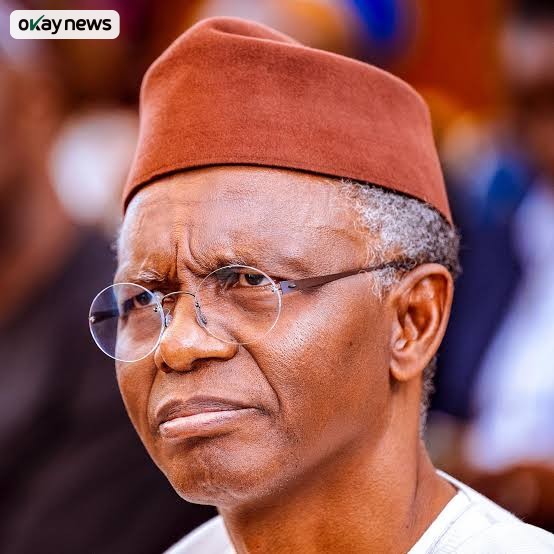
Abuja, Federal Capital Territory, Nigeria — Nigeria’s anti-corruption agency, the Independent Corrupt Practices and Other Related Offences Commission, has announced that it recovered electronic equipment allegedly capable of intercepting private communications from the residence of former Kaduna State Governor Nasir el-Rufai in Abuja.
The commission said it also secured a legal remand order from a Magistrate Court in Bwari, a district in Nigeria’s Federal Capital Territory, authorising the detention of the former governor for 14 days as investigations continue. The detention period is scheduled to expire on Thursday, March 5, 2026.
According to the ICPC, the items were recovered during the execution of a search warrant at el-Rufai’s home in the Asokoro area of Abuja, one of Nigeria’s most secure residential districts. The operation was carried out in the presence of his wife, Hadiza Isma el-Rufai, and his son, Mohammed Bello el-Rufai.
The anti-graft agency stated that the recovered materials included electronic magnetic devices allegedly capable of tapping telephone conversations, as well as sensitive documents belonging to various Nigerian security agencies. It claimed that some of the materials, if misused, could compromise national security.
Okay News reports that the commission said it confronted el-Rufai with the recovered items during preliminary questioning but alleged that he declined to cooperate with investigators. According to the ICPC, the former governor chose to remain silent and refused to grant access to the seized electronic equipment, despite being presented with a consent form.
The commission further alleged that el-Rufai previously admitted during a televised interview on Arise Television that he had tapped telephone conversations involving Nigeria’s National Security Adviser, Nuhu Ribadu.
In court filings, the ICPC rejected claims that the detention was arbitrary or politically motivated. It asked the High Court of the Federal Capital Territory to dismiss el-Rufai’s application alleging violations of his fundamental human rights.
Beyond the wiretapping allegations, the commission said it is investigating multiple corruption-related claims against the former governor. These include questions surrounding €1.4 million in cash withdrawals, ₦2,158,799,199 (about $1.45 million) linked to 180 suspicious payments from a government revenue account, and ₦428,122,180.18 (about $286,000) allegedly transferred to undisclosed accounts.
The ICPC also disclosed that one of el-Rufai’s aides connected to the investigation has left Nigeria, raising concerns about possible interference with witnesses.
In a sworn statement submitted to the commission, el-Rufai denied wrongdoing and described the investigation as political persecution. He said:
“I am a leading member of the African Democratic Congress (ADC), which I consider the only surviving opposition party in Nigeria, and that is the real reason I am being investigated.
“Regarding this question and any other questions, I have, on the advice of counsel, decided to exercise my right to silence.
“I believe that after nearly two years of intensive investigation, the ICPC should present its findings before a judicial tribunal and not to me.
“I will respond to any allegations only in a court of law. I do not believe these investigations amount to law enforcement.
“This is political persecution which only a judge can decide upon.”
The ICPC insisted that it followed due process and said it plans to file formal charges before the expiration of the detention order.