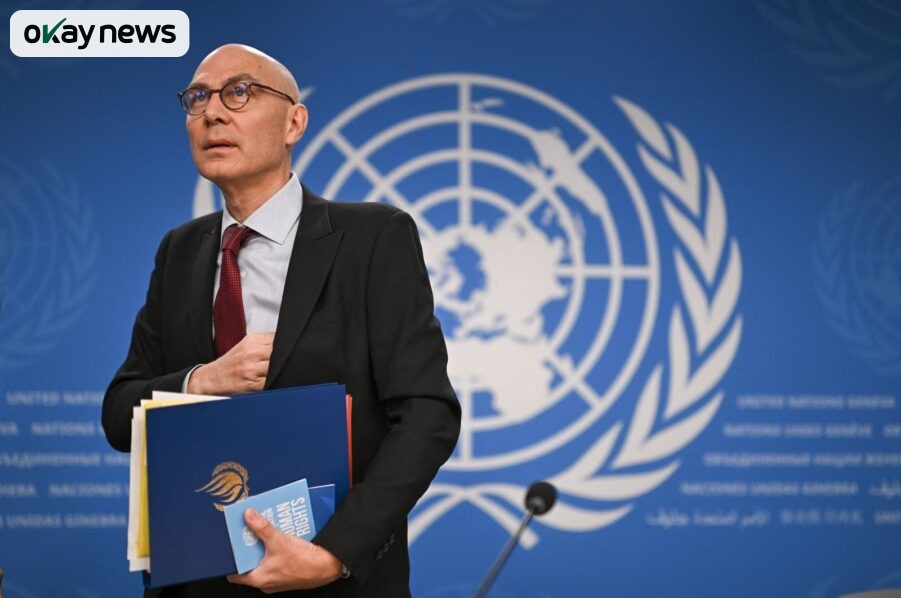
Geneva, Switzerland – On Friday, February 27, 2026, the United Nations High Commissioner for Human Rights, Volker Türk, warned that the number of armed conflicts around the world has almost doubled since 2010, raising concerns about what he described as the growing normalisation of force in international affairs.
Speaking at the United Nations Human Rights Council in Geneva, Switzerland, Türk said the world is increasingly turning to violence to settle disputes. The United Nations Human Rights Council is the main intergovernmental body within the United Nations system responsible for promoting and protecting human rights globally.
“We must not revert to violence as an organising principle”, Türk told delegates as he presented an update on global human rights conditions.
He cautioned that “the threat and use of force to solve disputes is becoming more frequent and normalised”, adding that the total number of armed conflicts worldwide has surged over the past 15 years.
“The number of armed conflicts has almost doubled since 2010, to around 60,” he said. “The world really is becoming a more dangerous place”.
His remarks come at a time when multiple regions are facing prolonged wars, internal unrest, and cross-border tensions, all of which have deep humanitarian consequences for civilians.
Türk also expressed concern about what he described as intense competition for influence and dominance among global and regional powers. According to him, this competition often comes at the expense of human rights protections.
He said there was the increasingly relentless competition for power for power’s sake, to the detriment of rights everywhere.
“Players compete for control over land, energy, and attention. But to what end?” he asked.
“Dominating the global economy? Accumulating more power? Putting AI into space? Surely power must serve other purposes.”
The High Commissioner criticised leaders who misuse authority and undermine institutions designed to uphold international law and protect civilians. He said it was “baffling that political leaders are not taking urgent steps to reverse (current) trends”.
Instead, he warned that some leaders are “attacking the institutions designed to keep us safe – the United Nations, including International Court of Justice; the International Criminal Court; this Council, and its mechanisms”.
The International Court of Justice is the principal judicial organ of the United Nations, responsible for settling legal disputes between states. The International Criminal Court is an independent international tribunal that prosecutes individuals for genocide, war crimes, and crimes against humanity.
Türk highlighted what he described as a troubling shift in global reaction to attacks on civilian infrastructure. He noted that about a decade ago, an attack on a hospital would have sparked global outrage.
“A decade ago, an attack on a hospital triggered a global outcry… (But) recent figures show there are now an average of 10 attacks per day on healthcare”.
Such attacks, he warned, weaken international humanitarian law and put civilians at severe risk.
“The world cannot stand by as the edifice of international humanitarian and human rights law is dismantled before our eyes”, he concluded.
Okay News reports that Türk’s comments underscore growing fears within the United Nations system that long-standing international legal frameworks are under strain as conflicts expand and accountability mechanisms face political pressure.
Why it matters is clear. As the number of armed conflicts rises, millions of civilians are exposed to displacement, injury, and loss of basic services such as healthcare. Who is affected extends far beyond combat zones, as instability can disrupt global markets, migration patterns, and international security arrangements.
What happens next will depend largely on how governments respond to calls for de-escalation, renewed diplomacy, and respect for international law. The United Nations Human Rights Council is expected to continue deliberations on conflict-related human rights concerns in the coming weeks.