The United Kingdom currently possesses no comprehensive plan to defend the nation in the event of an all-out war, a startling admission that includes a complete lack of strategy for mobilizing the National Health Service (NHS) to handle mass casualties.
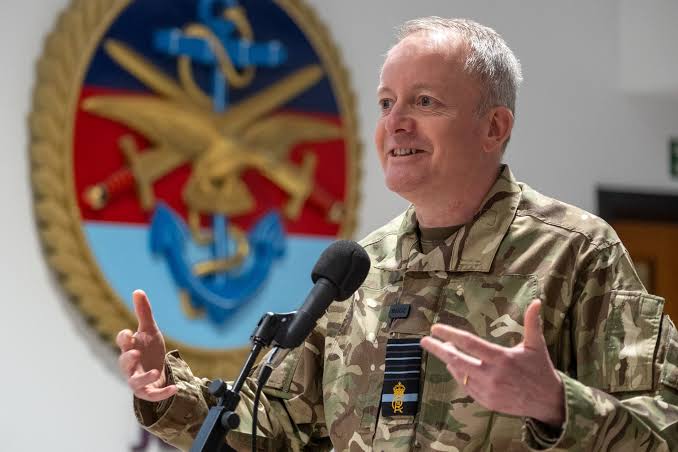
Air Chief Marshal Sir Richard Knighton, the Chief of the Defence Staff, confirmed this critical vulnerability while facing questioning from MPs on Monday. The revelation underscores a significant gap in national preparedness, confirming reports that the UK has failed to maintain a modern equivalent of the “Government War Book,” a strategic blueprint that once coordinated the entire country’s transition from peace to conflict until it was shelved following the collapse of the Soviet Union.
Okay News reports that Knighton attributed this lack of readiness to the “peace dividend” enjoyed by successive governments since the end of the Cold War, which saw funding priorities shift away from defense toward welfare and health. He admitted that despite the return of major conflict to Europe with Russia’s invasion of Ukraine, the UK has yet to revive the necessary holistic planning that would coordinate not just the armed forces, but also hospitals, police, and industry in a crisis.
While the military component of a new defense plan is expected to be finalized by the Ministry of Defence later this year, the broader national strategy, including the mobilization of civilian doctors and nurses, is currently being overseen by the Cabinet Office and may take another 12 to 18 months to develop.
The defense chief also painted a grim picture of the military’s financial health, conceding that the current budget is insufficient to cover the Ministry of Defence’s existing equipment program alongside the new ambitions set out in the recent Strategic Defence Review. Although Knighton refused to explicitly confirm reports of a £28 billion black hole in the defense budget over the next four years, he acknowledged that doing “everything” currently planned without additional funding is impossible. He hinted that slowing down or reducing specific military programs are options now being considered to balance the books, though he stopped short of using the word “cuts.”
This admission comes at a time of heightened geopolitical tension, with warnings mounting over the threat from Russia and increased instability on the global stage. The absence of a unified national defense plan places the UK at odds with NATO requirements, which mandate that member states maintain the capability to defend themselves as a baseline for the alliance’s collective security. The disclosure has sparked concern among defense analysts and lawmakers, who argue that the delay in re-establishing a coordinated national response mechanism leaves the country dangerously exposed in an increasingly volatile era.