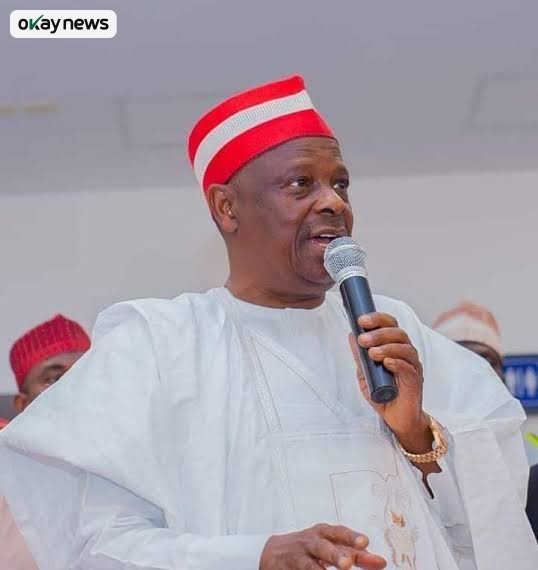
The Kwankwasiyya political movement, a major political bloc based in Kano State in northern Nigeria, has denied reports suggesting that its leader, Senator Rabiu Musa Kwankwaso, is preparing to leave his party and join the All Progressives Congress (APC), Nigeria’s governing party.
In a statement issued on Tuesday, February 3, 2026, the movement’s spokesperson, Dr. Habibu Mohammed, described the story making the rounds in the media as false and without evidence. Okay News reports that the group said it had watched the speculation grow across commentaries and television discussions in recent days.
Mohammed said the reports appeared to be linked to shifting political alignments and fresh rumours in Kano State politics, which have also drawn reactions in recent weeks.
He pointed to claims of defections involving Kano State Governor Abba Kabir Yusuf, the elected leader of Kano State, Nigeria’s most populous state, and other officials. The statement said the governor was reported to have moved from the New Nigeria Peoples Party (NNPP) to the APC alongside 22 members of the Kano State House of Assembly, eight members of Nigeria’s House of Representatives, and 44 local government chairmen in the state.
Responding to the wider defection narrative, the movement insisted that Kwankwaso had not held any talks aimed at switching parties.
“Senator Rabiu Musa Kwankwaso has never at any time entered into negotiations, discussions, or meetings with the All Progressives Congress, President Bola Ahmed Tinubu, or any proxy for the purpose of defection,” the statement said, referring to Tinubu as Nigeria’s current president.
The group also criticised what it described as reporting built on rumours rather than verified information, warning that such claims could damage reputations and mislead the public.
Mohammed said the movement believed political reporting should be based on investigation, balance and accuracy, and not on what he called elite gossip or assumptions presented as insider facts.
He added that the last formal meeting between Kwankwaso and President Tinubu took place in January 2026, but said the meeting was not about party movement or bargaining.
According to the statement, “no discussion whatsoever” took place at that meeting on defection, party alignment, or political deals. It also dismissed claims that Kwankwaso made demands or set conditions to join the APC, describing them as inventions built around talks that did not happen.
The movement said Kwankwaso has long maintained personal and political relationships across party lines and past administrations, and argued that meetings between leaders should not automatically be turned into claims of secret political transactions.
Mohammed further alleged that the current wave of reports was part of a coordinated effort by some political figures to weaken Kwankwaso’s standing ahead of future political changes. He claimed that some of those spreading the stories were people who wanted to defect to the APC, or who had already done so, and were now trying to justify their choices by portraying Kwankwaso in a negative light.
The statement portrayed Kwankwaso as a politician guided by discipline, integrity and principle, saying he does not trade his political beliefs in private meetings or follow what it called politics of convenience.
It added that his support base, especially among poorer Nigerians, remained steady and was not being swayed by what it described as organised misinformation.
The movement urged Nigerians to ignore the reports and repeated its position that there were no talks, no demands, and no discussions about leaving for the APC.
Kwankwaso, a former governor of Kano State and a prominent figure in Nigeria’s opposition politics, has been the subject of intense speculation in recent months as parties position themselves ahead of future elections and alliances.