
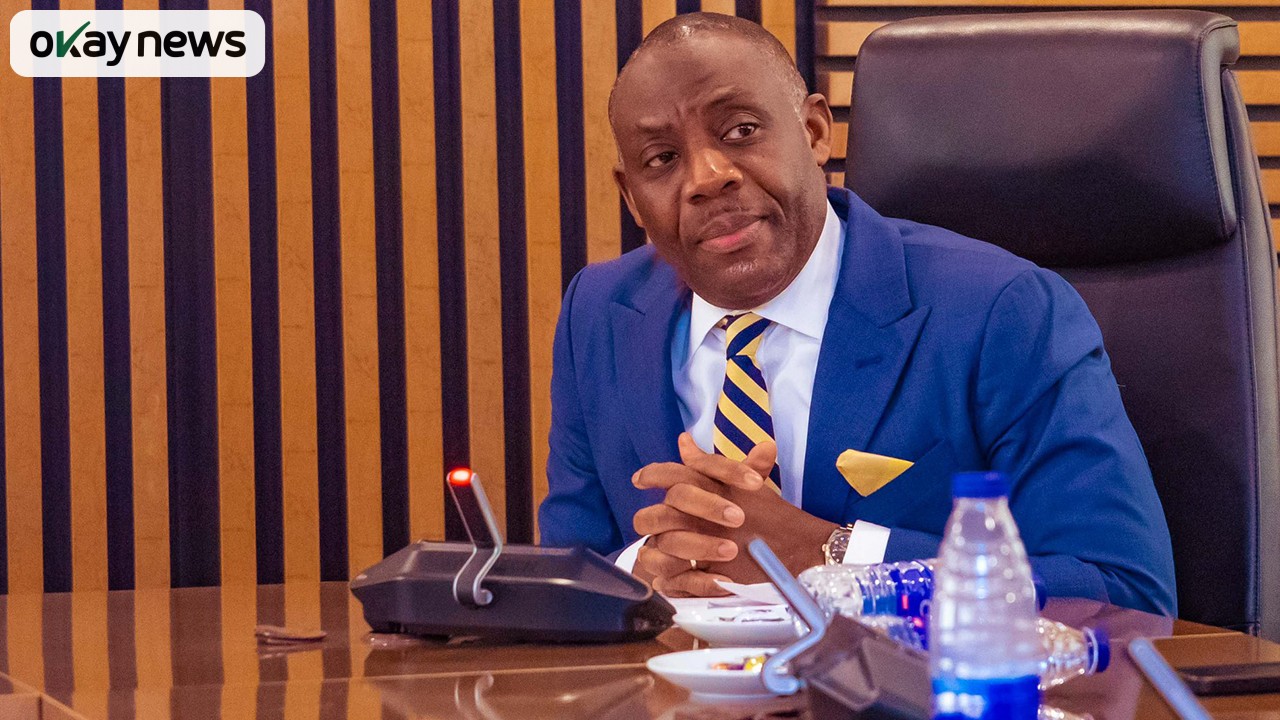
LAGOS, NIGERIA — Nigeria is now reportedly in a stronger position to tackle the persistent challenges of the Almajiri system and the high number of out-of-school children, the country’s Minister of Education, Tunji Alausa, has stated. Okay News reports that Alausa made the comments on Sunday, 1 March 2026, while addressing the Committee of States Commissioners of Education in Nigeria (COSCEN) during a peer-learning webinar aimed at advancing coordinated education reforms across the country.
The minister described the initiative as timely and consistent with Nigeria’s national education priorities, emphasizing that close collaboration between the federal government of Nigeria and state-level governments is essential to sustainably reduce the number of children excluded from formal education.
“Reducing out-of-school children requires shared accountability, harmonised implementation frameworks, and evidence-based planning across all tiers of government,” Alausa said.
Nigeria has one of the largest populations of out-of-school children globally, with millions reportedly affected, especially in northern states where the Almajiri system—a traditional Islamic educational model—remains widespread. Over time, the system has faced criticism for contributing to child vulnerability, including street begging and exposure to unsafe conditions, largely due to inadequate regulation and weak integration into the formal education system.
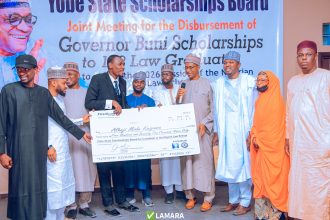
Alausa credited the country’s improved capacity to confront the issue to the creation of the National Commission for Almajiri and Out-of-School Children Education, calling it a strategic institutional response to a decades-long challenge. He highlighted the leadership of the commission’s Executive Secretary, Dr. Muhammad Sani Idris, who himself rose from an Almajiri background to earn a PhD and previously served as Commissioner for Education in Yobe State.
“Today, the issue of Almajiri and out-of-school children—the work starts in the states—and I am happy with the renewed interest we are seeing in each of our states in putting strategies together to tackle the burden,” Alausa added.
He further praised the structured reform initiatives led by COSCEN under its Chairman, Dr. Lawal Olohungbebe, noting that institutionalised peer learning strengthens policy coherence and accelerates measurable progress in nationwide access to education and equity.
“Let me take this opportunity to thank COSCEN Chairman, Dr. Olohungbebe, for his work. I know you now have a functioning secretariat at the Independent National Electoral Commission (INEC) office, and I want you to make good use of it,” Alausa said.
Dr. Olohungbebe, who is also the Kwara State Commissioner for Education, said the initiative signals a shift from consultative dialogue to results-oriented coordination anchored on data, peer accountability, and policy harmonisation.
“This platform moves us beyond discussions to structured solution sharing that aligns state innovations with federal frameworks, ensuring our complementary mandates deliver measurable outcomes for children,” he said.
The committee’s maiden webinar spotlighted Gombe State, highlighting the theme: “Gombe Strategy in Addressing Out-of-School Children: Innovative Models, Measurable Results and Scalable Options.” According to the National Coordinator, Dr. Leo Ebenezer, the virtual session advanced COSCEN’s peer-learning agenda and promoted coordinated reforms targeting Nigeria’s out-of-school population.
Gombe State’s Commissioner for Education, Aishatu Umar Maigari, showcased data-driven interventions credited with improved enrollment outcomes and scalable models adaptable across Nigeria’s diverse educational systems.
Education experts note that sustained funding, accurate data tracking, community engagement, and integrating Almajiri programs into formal curricula are critical to ending the cycle of exclusion, which has long been linked to poverty, insecurity, and youth unemployment.